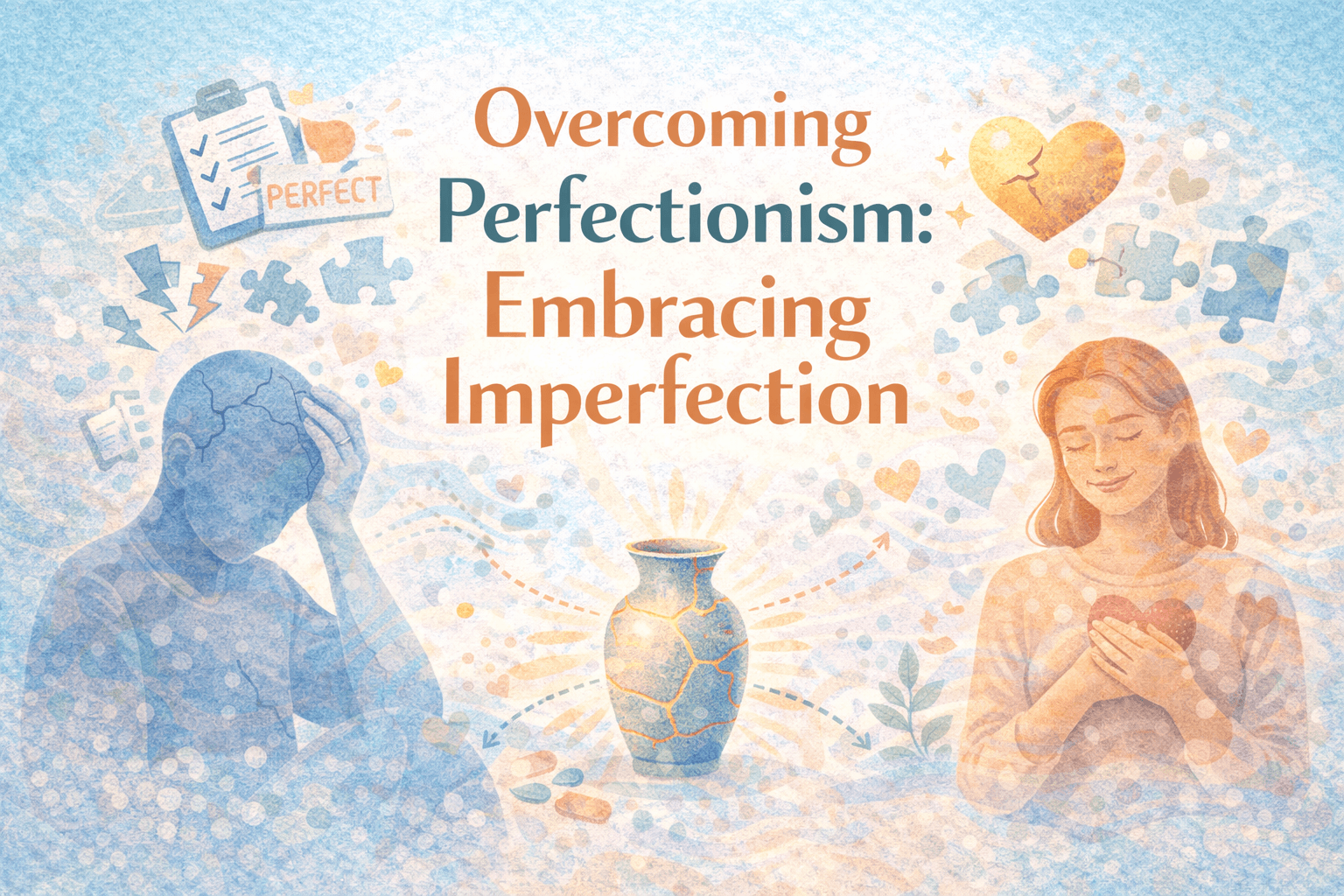
Perfectionism can look like high standards, but it often comes with harsh self-criticism, fear of failure, and a sense that you’re never enough. It can fuel anxiety, procrastination, and burnout. Shifting toward “good enough” and self-compassion doesn’t mean giving up on quality—it means freeing yourself from an impossible bar.
Notice the cost
Perfectionism can mean hours extra on a task, avoiding things you might not do flawlessly, or constant worry about how you’re perceived. It can strain relationships when you hold others—or yourself—to unreal standards. Acknowledging the cost is a first step toward change.
Separate standards from self-worth
You might believe that doing things perfectly is what makes you acceptable. In reality, your worth isn’t decided by one project, one conversation, or one outcome. Mistakes and “good enough” don’t make you less valuable. This is often a core belief that therapy can help soften.
Practise “good enough”
Choose one area—a work email, a home task, a hobby—and consciously aim for “good enough” instead of perfect. See what happens. Often the outcome is fine and the time and stress you save are significant. You’re training your brain that the world doesn’t end when things aren’t flawless.
Challenge the inner critic
When the critic says, “That’s not good enough” or “They’ll think you’re incompetent,” ask: “Is that a fact or a fear? What would I say to a friend in this situation?” Replace the critic with a more reasonable, compassionate voice over time.
Let yourself be a beginner
Perfectionism often blocks you from starting something new because you can’t stand being bad at it. Give yourself permission to be a beginner. Sucking at something is part of learning. Progress, not perfection, is the aim.
If perfectionism is driving chronic anxiety, avoidance, or burnout, therapy can help you understand its roots and build a kinder, more flexible way of relating to yourself and your goals.