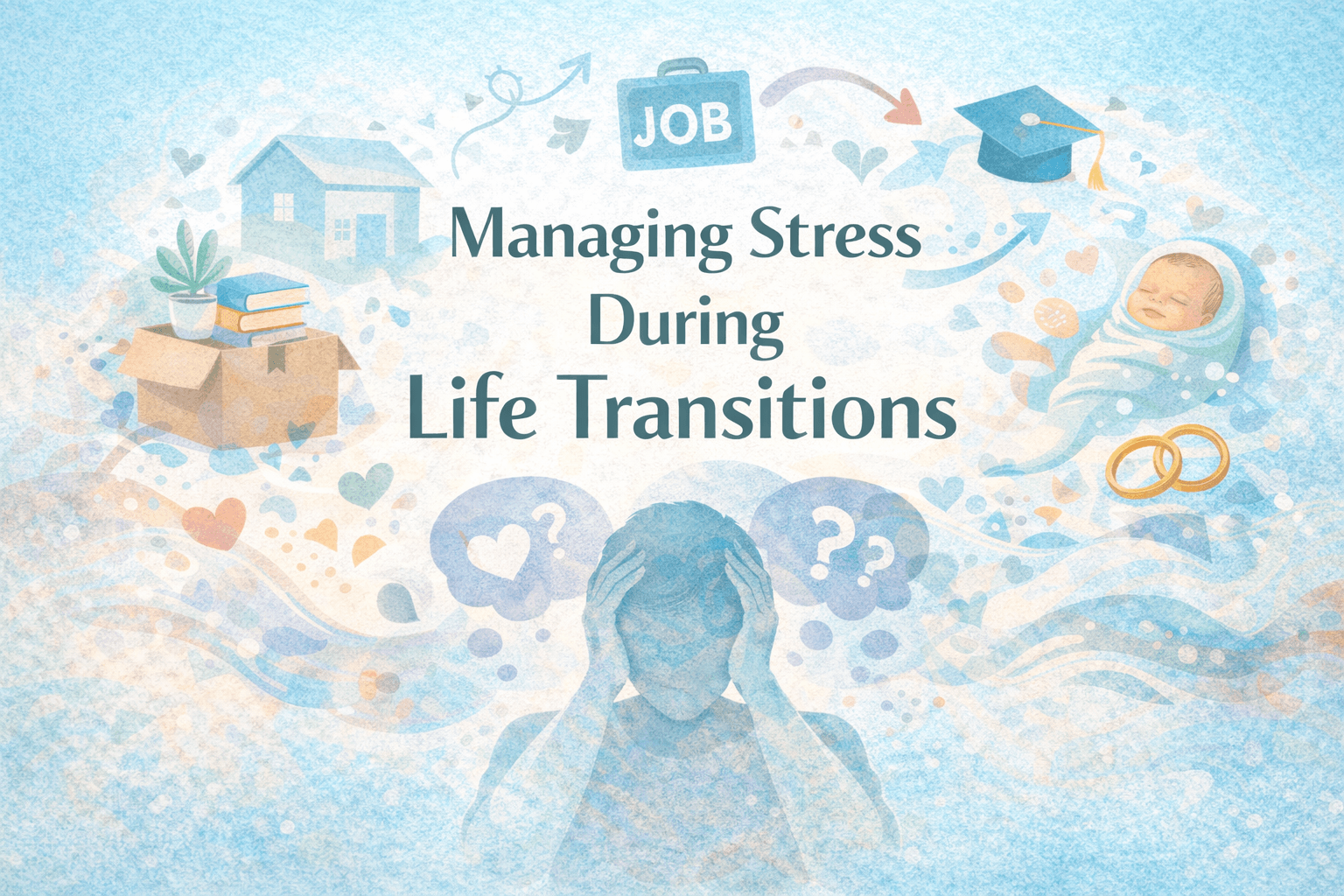
Career changes, moving, relationship shifts, loss, or a new role—transitions stir up uncertainty even when the change is wanted. Your mind and body can feel overloaded. These strategies can help you move through transitions with more steadiness.
Name what’s changing
Stress can feel vague until you put words on it. Write or say: “What exactly is shifting? What’s ending? What’s beginning? What’s still unclear?” Clarity doesn’t remove the difficulty, but it reduces the fog and helps you see what you can influence.
Expect mixed feelings
You can be excited and scared, relieved and sad, all at once. That’s normal. Transitions often bring grief for what’s being left behind, even when the new chapter is good. Allowing both joy and sadness avoids the extra strain of fighting your emotions.
Keep a few anchors
When a lot is in flux, stable routines help. Protect one or two non-negotiables: a morning walk, a regular call with a friend, a wind-down before bed. They act as anchors so not everything feels unfamiliar at once.
Break it down
Big transitions create long to-do lists. Pick the next small step—one form, one call, one decision—and do that. “What can I do in the next hour or today?” is more manageable than “How do I get through this whole change?”
Ask for support
Transitions are not meant to be handled alone. Tell a few people what you’re going through and what would help: practical support, a listening ear, or simply company. Accepting help is a strength, not a weakness.
If stress is affecting your sleep, mood, or ability to function for weeks, consider speaking with a therapist. They can help you process the transition and build a plan that fits your situation.